
7 Red Flags When Buying a Home in Burleson
Warning signs to watch for when touring Burleson, TX homes: foundation movement, drainage problems, roof wear, cover-ups, rushed flips, and unpermitted work.
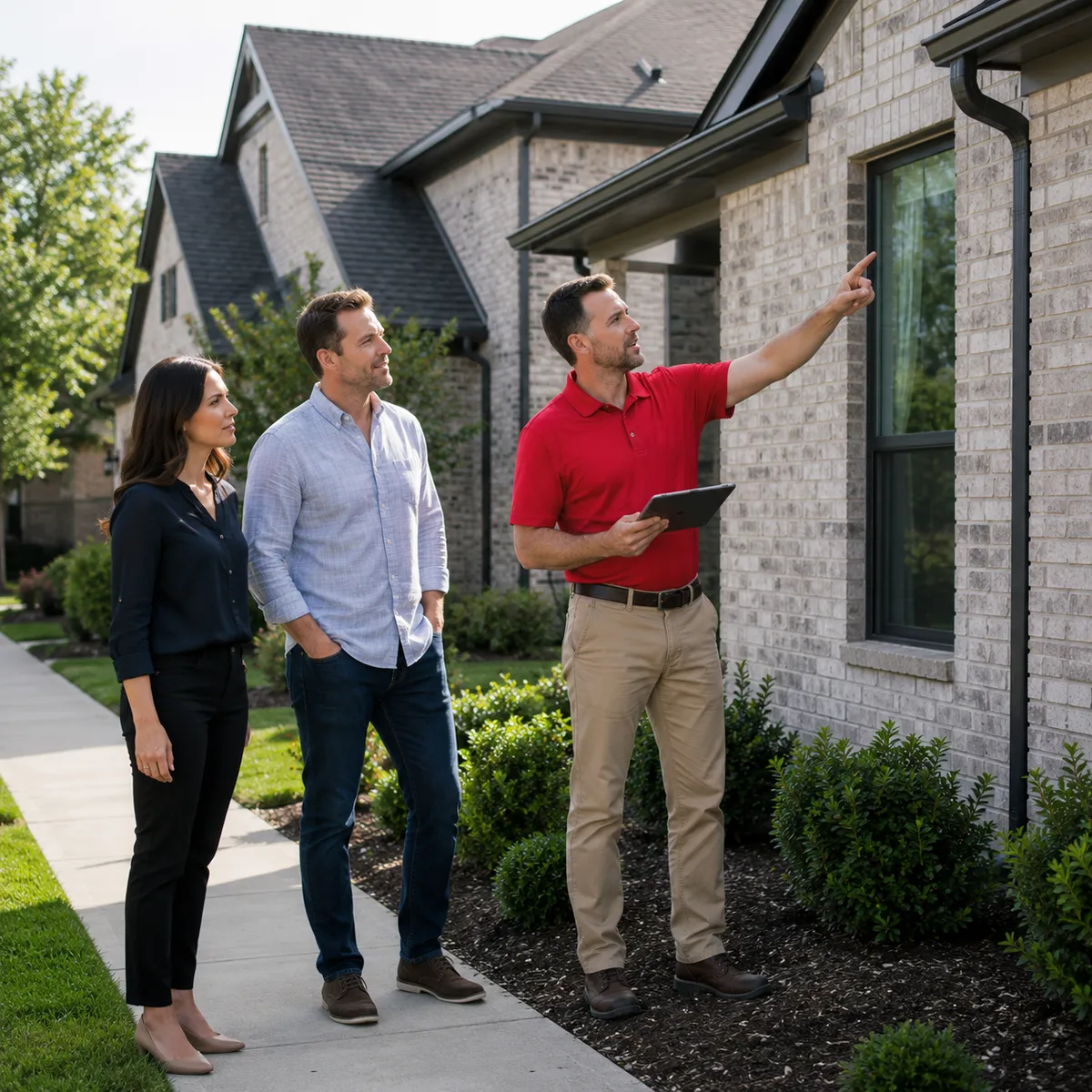
Red flags are the warning signs you can catch with your own eyes during a showing, before you spend a dime on inspections. None of them automatically means walk away, but each one tells you where to dig deeper and what questions to put in writing. In Burleson, where expansive clay soil and hail do most of the damage to houses, a few of these show up again and again.
1. Signs the slab is moving
Foundation movement is the red flag that matters most around Johnson County, because the clay soil here swells when wet and shrinks in drought, flexing slabs season after season. During a tour, look for stair-step cracks in brick, diagonal cracks radiating from door and window corners, doors that rub or will not latch, and floors that feel out of level. Also ask directly whether the foundation has ever been repaired: prior repair with a transferable warranty and engineer documentation can be fine, while unexplained fresh patching is a question mark.
2. Water pooling against the house
Drainage is the foundation's upstream cause, so walk the outside of any Burleson home like it just rained. Soil sloping toward the slab, downspouts dumping at the base of the wall, flowerbed edging that traps water against brick, and green stains or silt lines all point to water being held where it does damage. Drainage fixes can be cheap, but years of bad drainage may already be written into the foundation, so treat the two flags as one story.
3. A roof nobody can put a date on
North Texas roofs live hard lives, and hail is the reason. If the seller cannot say how old the roof is or whether it has been replaced after a storm, price that uncertainty into your thinking. From the ground, look for shingles with bruised or bald patches, lifted edges, and mismatched sections that suggest partial patching rather than replacement. Roof condition also drives what you will pay to insure the home here, which makes an aging roof a monthly cost, not just a future repair.
4. Stains, smells, and suspiciously fresh paint
Water leaves a trail: brown ceiling rings, bubbling paint, warped baseboards, corrosion under sinks, and a musty smell that hits you at the door. Be equally alert to cover-ups. One freshly painted ceiling in an otherwise original house, heavy air fresheners in a single room, or new flooring in only one corner can mean someone is hiding a stain rather than fixing a leak. Open cabinets under every sink and run the exhaust fans. Your nose is a legitimate inspection tool.
North Texas gives water two easy ways into a house. A roof that has taken hail can leak slowly for a season before anyone notices, and a slab that has moved on clay soil can stress the plumbing running beneath it. So when you find a stain, ask which of those stories explains it, when the roof was last replaced, and whether any plumbing has been repaired or rerouted.
5. The flip that moved too fast
A remodeled home is not a red flag; a rushed one is. Check the listing history: if the home sold recently and is back on the market with a full cosmetic makeover, assume the budget went where buyers look. Test what the photos cannot show, such as drawer slides, door alignment, water pressure, and whether the HVAC, water heater, roof, and electrical panel got the same attention as the countertops. In a flip, the inspection matters more, not less, because paint hides age well. Ask the flip questions the local way: was the roof part of the remodel or only the surfaces that photograph well, and was any foundation work performed, permitted, and documented with a warranty that transfers to you?
6. Additions without paperwork
Converted garages, enclosed patios, and bonus rooms add space, but if the work was done without permits you may inherit safety problems, insurance friction, and headaches when you resell. Ask the seller who did the work and whether it was permitted, and verify with the city's permit records rather than taking the listing's word. Work inside Burleson city limits goes through the city; properties outside the limits follow county rules, so confirm which applies to the address.
7. A listing that reads evasive
Some red flags live in the paperwork. Watch for a home that has gone under contract and come back on the market, a price history with repeated cuts, seller's disclosures with vague or contradictory answers, and photos that avoid whole rooms or the exterior. None of these proves a problem, but each one is a thread worth pulling before you write an offer, and your agent can usually find out the story behind a deal that fell through. One thread is worth pulling first here: ask when the earlier contract died. Texas buyers do their inspecting during the option period, so a deal that ended inside that window usually ended over something an inspector found, and that is a question the seller has already been asked once.
When you spot any of these, remember that a red flag is a reason to investigate, not necessarily to walk. Put your questions to the seller in writing, get a professional inspection during your option period, and bring in a specialist, such as a structural engineer or roofer, when the inspector recommends one. What you learn either clears the house, arms your negotiation, or tells you to move on, and all three outcomes beat finding out after closing.