
New Construction Home Inspections in Burleson, TX
A new construction inspection is an independent review of a home while it is being built, done in phases: before the slab is poured, before drywall covers the framing, before closing, and again near the end of the builder's first-year warranty. City code inspections do not replace it. The municipal inspector checks minimum code compliance; your inspector works only for you.
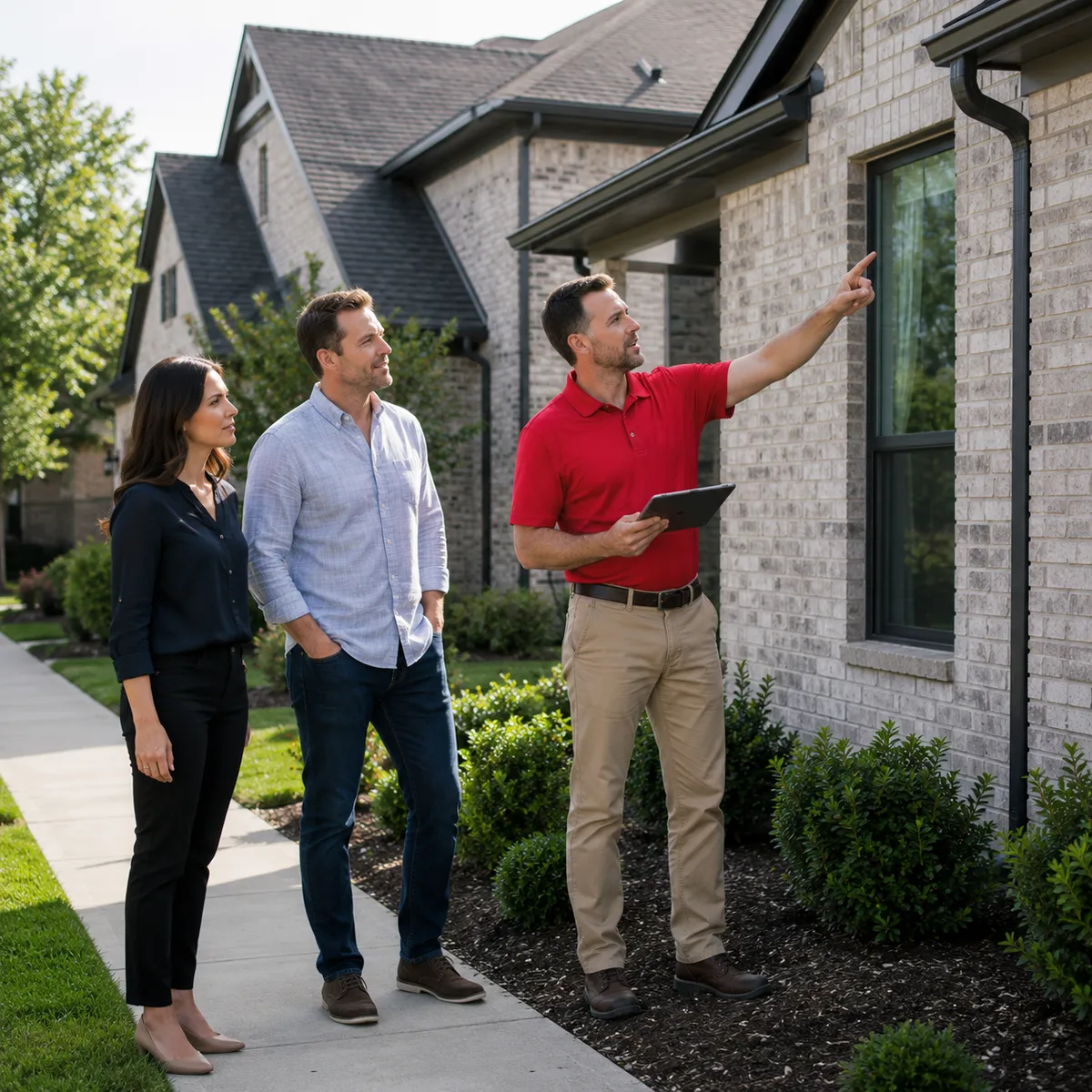
Why brand-new homes still get inspected
A new home passes multiple city inspections during construction, but those visits are brief and confirm minimum code compliance, not workmanship or completeness. In a fast-growing corridor like Burleson and the surrounding Johnson County towns, builders run many jobs at once with rotating subcontractor crews, and details get missed. An independent inspector is the one person in the process paid solely to represent your interest in the finished product.
The local pressure on a build schedule is worth understanding before you sign. New construction here sits along the I-35W corridor south of Fort Worth, where demand keeps several communities under construction at once and the same trade crews rotate between them. That is not an argument against buying new. It is the reason your house deserves someone whose only job that day is your address, and the reason to plan the inspection around the build's milestones instead of the sales office's closing date.
Phase 1: the pre-pour foundation inspection
Before concrete is poured, an inspector can verify the parts of the foundation you will never see again: the forms, the placement of reinforcing steel or post-tension cables, plumbing rough-ins, the moisture barrier, and pad preparation. This phase matters more in North Texas than in most places, because slabs here have to be engineered for expansive clay soil. Once the pour happens, everything beneath it is permanent.
The Johnson County ground is the reason that sentence is not boilerplate. Clay under a Burleson lot swells after rain and shrinks through a dry summer, and the slab design is the one part of the house built specifically to ride out that movement. A pre-pour visit is your only chance to see whether the pad, the reinforcement, and the moisture barrier match the engineered plan you are paying for. Every foundation symptom described in our foundation guide starts as a decision made on this morning.
How Clay Soil Moves Burleson Foundations
The first-year warranty countdown
The three month markers this guide gives for the builder warranty inspection.
- Schedule the warranty inspectionBook the inspector early enough that the report and your claim both land before coverage ends.Around month 10
- Hold the 11-month inspectionA full year of North Texas weather has now tested the slab, the roof, and the cooling system.Month 11
- Workmanship coverage runs outClaims filed after this date are the builder's courtesy rather than your right.End of year one
Month markers as this guide states them, not measured Burleson data. Builder warranty terms, coverage lengths, and claim deadlines vary by builder and contract, so read your own warranty paperwork for the exact expiration date.
Phase 2: the pre-drywall inspection
The pre-drywall visit happens after framing, wiring, plumbing, and ductwork are in, but before insulation and drywall close the walls. It is the highest-value inspection of the entire build, because it is the last look at components that will be concealed for the life of the house: framing connections, notched or over-bored studs, wiring runs, water lines, duct joints, window flashing, and roof decking. A misrouted drain line costs little to correct now and a great deal after the walls are finished.
Two items on that list earn extra attention in this climate. Window and wall flashing is what keeps wind-driven rain out of a wall assembly, and North Texas spring storms drive rain sideways rather than down. Duct sealing decides whether the cooling you paid for reaches the far bedroom in August. Both are invisible a week later, and both are cheap to correct while a framer and a mechanical crew are still on site.
Phase 3: the final inspection before closing
The final inspection is a complete review of the finished home, the same scope as a resale inspection: structure, roof, attic, electrical, plumbing, HVAC, appliances, grading, and finish work. Do not confuse it with the builder's own blue-tape walkthrough, which leans cosmetic. Bring your inspector's report to that walkthrough so incomplete and deficient items are documented before closing, while your leverage is at its peak.
Give the exterior grading its own walk. On a slow-draining clay lot, soil that slopes toward the slab, downspouts that end at the foundation, and fresh sod hiding a low spot are the beginnings of the drainage problems that show up in Burleson inspection reports years later. Finish grade is set once, at the end of a build, by whoever happens to be on site. Catching it now costs a phone call.
The 11-month builder warranty inspection
Most builders provide a workmanship warranty covering the first year of ownership. An 11-month inspection, scheduled just before that warranty expires, catches what the first year revealed: settlement cracks, doors knocked out of alignment as the framing dried, HVAC shortcomings that only a full Texas summer exposes, and leaks around roof and wall penetrations. The report becomes a documented punch list you can submit as a warranty claim while the builder is still responsible for the fixes.
A first year in Burleson is a genuine test of the house. The slab spends a spring in swollen clay and a late summer in shrinking clay, the air conditioning runs through months of North Texas heat, and at least one round of spring storms works on the roof and the flashing. Whatever the build got wrong tends to speak up during that cycle, which is exactly why the inspection belongs near the end of it and not six months in.
Scheduling phase inspections with your builder
- Put third-party inspection access in writing when you sign the build contract; many builders accommodate it, but the contract is your guarantee.
- Ask the builder for milestone dates for the pre-pour and pre-drywall stages, and give your inspector early notice, because those windows can be short.
- Choose an inspector with real new-construction experience; phase inspections are a different discipline from resale work.
- Keep every phase report together; the set documents the build history of the house, which helps at the 11-month claim and again when you eventually sell.
Two of those bullets are harder than they sound in a busy building corridor. Pre-pour and pre-drywall windows can open and close within a day or two when crews are moving between communities around Burleson, so give your inspector a heads-up as soon as the builder names a target date rather than waiting for confirmation. And keep the phase reports somewhere you will find them in a decade: Texas sellers complete a disclosure notice and buyers here read construction records closely, so the file you build now becomes part of your listing later.
If you are still deciding on a builder or a community, weigh how each builder handles independent inspections. A builder that welcomes outside eyes is telling you something about the product.
Research Burleson Home Builders
Browse New Construction Homes in Burleson
Builder warranty terms and inspection access policies vary by builder and contract. Confirm warranty coverage, claim deadlines, and inspection rights in writing with your builder.